Creative Director · 2023–2024
A paranoia-fueled adventure mystery in the streets of modern-day Cairo. My MFA thesis at USC's Advanced Games Program.
Adventure games ask you to find clues. They rarely ask you to reframe them. We wanted a mystery where understanding the city (its connections, its rumors, its lies) was itself the mechanic.
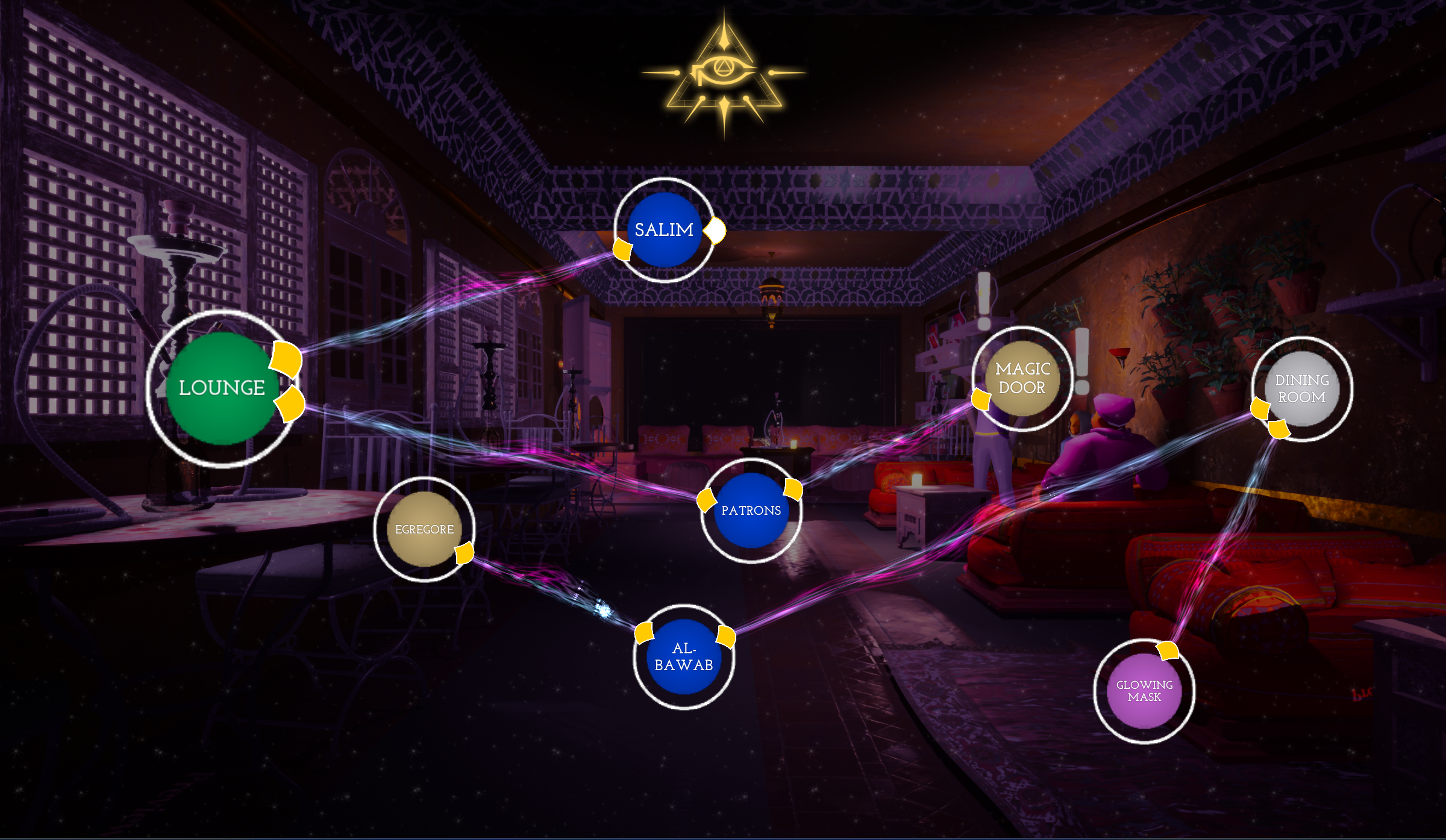
ApproachA graph-based perception system. Players collect fragments of knowledge as nodes; reshaping the graph reshapes what the world reveals. I directed mechanic, narrative, and production across a 20-person team for two years.
OutcomeOne of 10 projects selected from 50+ pitches by a panel of industry veterans. Shipped on Steam to Mostly Positive reviews. Featured at Game Devs of Color Expo 2024 and the USC Games Expo. Original score by Thornton students.
As Creative Director I owned the vision and orchestrated everyone working toward it. In practice that meant:
Mechanic design. The graph-based perception system: how nodes are discovered, how connections rewrite environment state, how players know they're making progress. A deliberate subversion of classic adventure game logic: rather than a single correct solution, the graph allows multiple valid paths that reflect how the player has actually come to understand the world. To wire narrative directly into the mechanic, we extended the NotYet Dialogue System plugin in C++, building a custom tool that let us script character behaviours and dialogue through the graph rather than alongside it. The whole process was a close collaboration across engineering, design, and narrative, with all three disciplines shaping the tooling together so the systems could actually serve the vision.
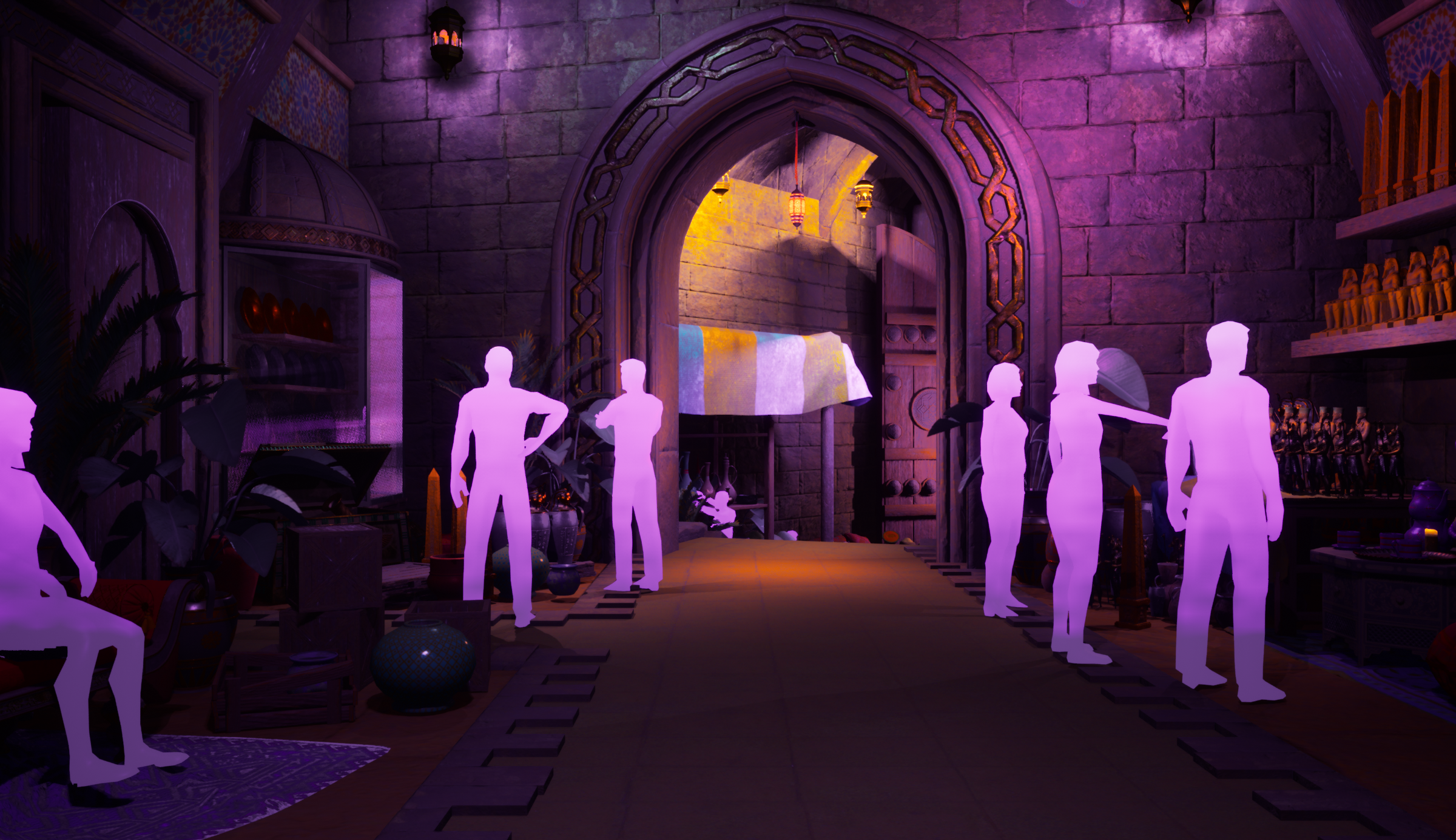
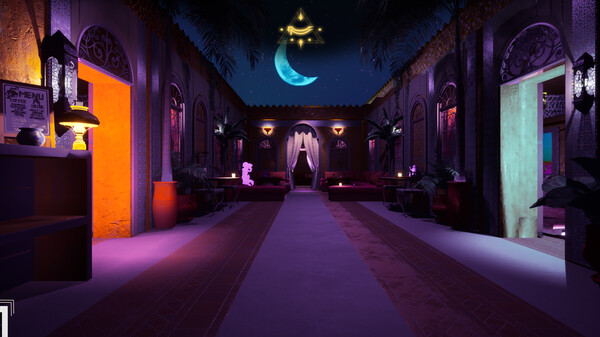
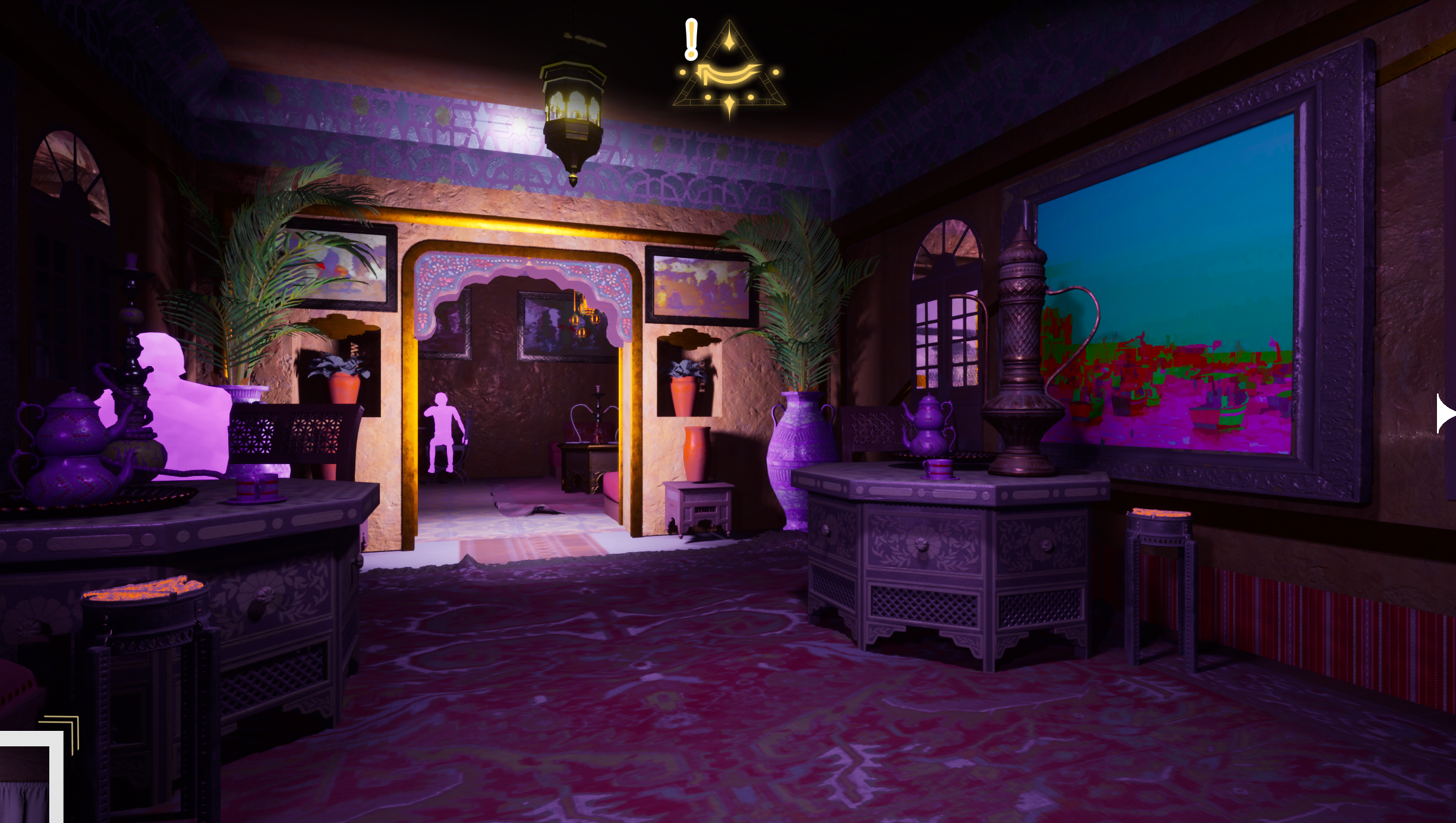
Narrative and worldbuilding. Story arc, character voice, environmental storytelling, dialogue. The world drew on the dense, conspiratorial fiction of Umberto Eco and Thomas Pynchon: layered knowledge, unreliable information, the paranoia of knowing too much. Cairo itself was a deliberate reframe. Where Western media tends to render the Middle East as drab and dusty, we built a city that is vibrant and colorful, with characters just as vivid as the setting.
Production. 20 people across design, engineering, art, and audio. Sequencing milestones, defending scope, deciding what got cut so the rest could ship well.
A novel mechanic is a tax on every other discipline. UI, level design, narrative pacing all bend around it. The wins came from leaning into that constraint, not around it: the graph stopped being a clever feature and started being how the game thinks.